
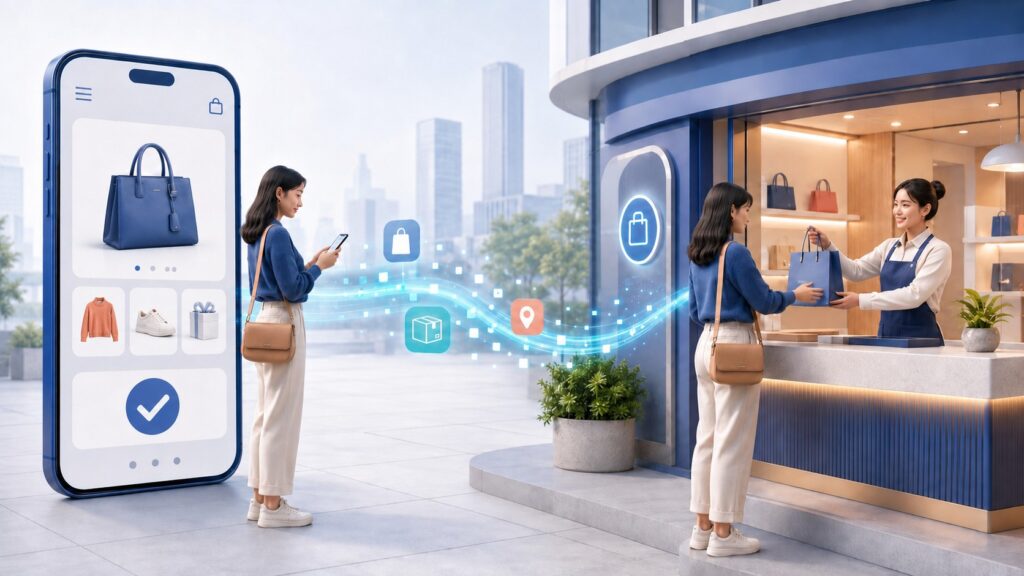
How Online-to-Offline Conversion Works
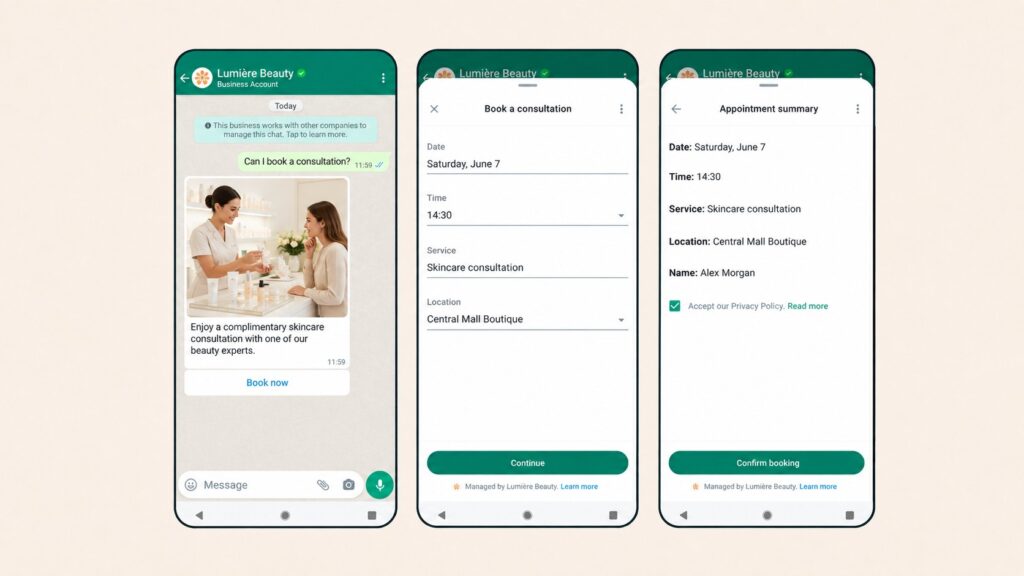
The scenario starts with a user who taps a button to open WhatsApp and sends a consultation request.
In response, the company sends information about the service and offers to book an appointment. Tapping the button opens an interactive form where the customer chooses the date and time of the visit, the type of consultation and a convenient location.
Before submitting, the user reviews the selected details and confirms the booking. The whole process takes place inside WhatsApp, with no phone calls, redirects to third-party pages or long forms to fill out.
Once the booking is confirmed, the integration can pass the chat ID and booking details to the CRM. The manager receives information about the service, time and place of the visit, and the customer gets a ready confirmation. This is how an online inquiry turns into a scheduled visit to a physical location.
Mechanics That Help Turn Inquiries into Visits
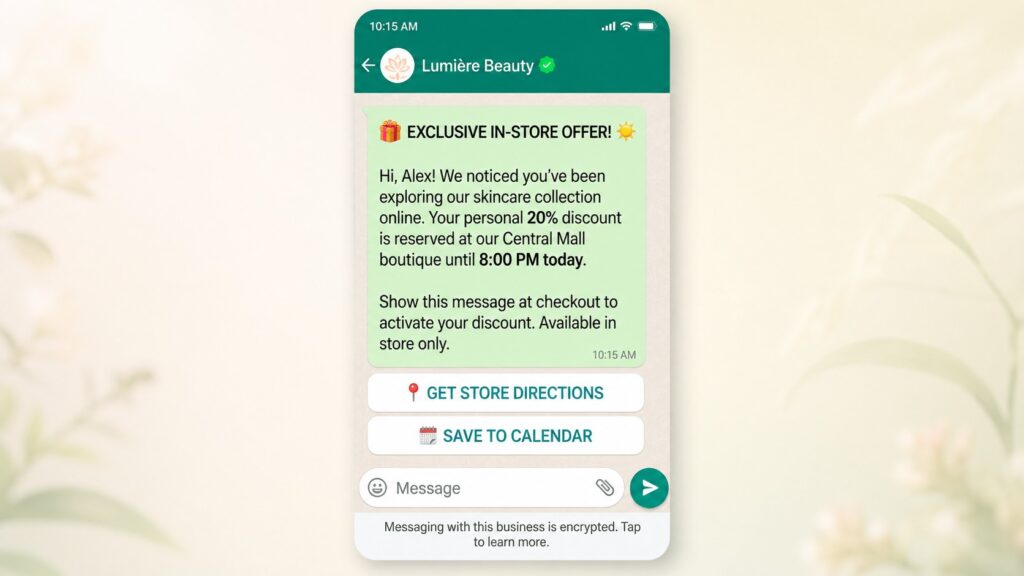
Personalizing messages based on CRM data, website interaction history and the user’s replies in the chat helps increase the likelihood of a visit.
If a customer has chosen to share their location, you can suggest the nearest store or service point. Personal invitations to a consultation, a collection preview, a test drive or another offline event give customers an extra reason to visit.
Links for getting directions and adding the visit to a calendar cut down on extra steps and reduce the chance that the customer will miss the scheduled visit.
Conclusion
WhatsApp-based O2O marketing connects online promotion, customer conversations and the work of a physical point of sale. As a result, the business gets a shorter customer journey and can track every stage of the funnel, from the first inquiry to the purchase.
With GREEN-API, you can receive incoming messages via webhooks, automate chatbot replies, send store locations and map links, and pass conversation data to your CRM.