
For the most part, the process of registering phone numbers on popular messaging apps has always boiled down to one simple step: users only had to enter an SMS code once so the app could verify that the number belonged to the person signing up. The account would continue to function as usual, regardless of whether the user switched phones or SIM cards.
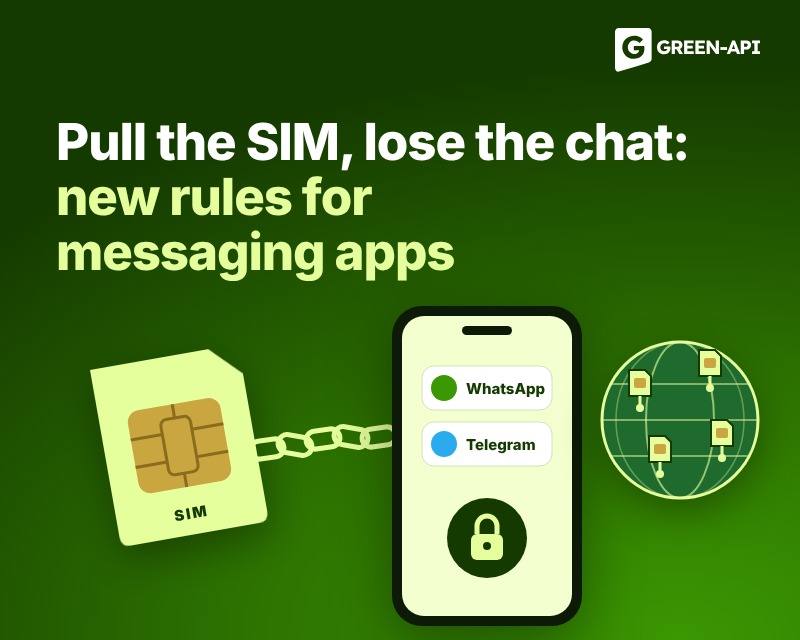
However, recent news from India indicates that the country’s authorities have decided to revise this approach, requiring WhatsApp, Telegram and other messaging apps to switch to continuous SIM-card presence verification.
Table of Contents
What’s happening
This measure is aimed at combating cyber fraud and the unauthorized use of phone numbers by linking messaging app accounts to active SIM cards. Phone number owners are required to verify their identity through the KYC process.
According to rules proposed by the Indian government, starting January 1, 2027, users of WhatsApp, Telegram, and other messaging apps must ensure that the registered SIM cards on their devices remain active. The new regulation will require messaging platforms to ensure their services function only if the device has a valid SIM card linked to the account.
India’s Department of Telecommunications (DoT) has set December 31, 2026, as the deadline for compliance.
What are the consequences?
According to the regulation, messaging apps that use Indian phone numbers for registration must verify that the registered number is linked to an active SIM card. Failure to comply will result in users losing access to their messaging accounts starting next year if the SIM cards linked to them are removed, deactivated, or replaced.
In practice, this means that once the SIM card used to create the account is removed, users will lose access—that is, the account will be “frozen”— and if there are active sessions in the desktop and web versions of the apps, users will need to re-authenticate every 6 hours using a QR code until the SIM card issue is resolved.
Why is this necessary?
One of the key reasons for this new measure is cyber fraud. The government’s decision is part of a program to combat cybercrime, phishing operations, and fraudulent schemes. According to India’s Ministry of Communications (DoT), cybercriminals use local phone numbers to register for messaging apps and then operate them from outside India.
Authorities believe that strict controls on linking messaging app accounts to active SIM cards will make it more difficult to use numbers illegally and enhance cross-border oversight.
What’s next
WhatsApp and Telegram are among the platforms expected to be subject to these requirements.
The changes may most significantly affect users who keep their registered SIM card in a secondary phone while using WhatsApp on another device, as well as those who remove the SIM card after setting up their account and those who primarily use Wi-Fi and rarely make mobile calls.
Users of dual-SIM devices may also need to ensure that the number linked to their messaging app account remains active and meets the platform’s requirements. These rules are expected to apply to both physical SIM cards and e-SIM profiles.
Pros and cons
If you use messaging apps for professional purposes, these changes will help solve the problem of receiving annoying ads and spam—this will leave scammers with fewer “loopholes” for mass-sending suspicious messages or calls. Regular users will also benefit—the number of unwanted interactions with malicious actors will decrease.
As for the downsides, having to re-authenticate every 6 hours in the web and desktop versions can be annoying if you rely on messaging apps to communicate with clients. However, this will provide more reasons to link a permanent SIM card for work purposes.
Conclusion
India was the first to require linking messaging apps to a SIM card, and by the beginning of next year, it will become clear how effective this measure is in practice—that is, how reliably the apps will distinguish an “active” SIM card from an inactive one, and how authentication will be implemented for tablets and secondary phones. Of particular interest is the issue of session termination in the web and desktop versions of the apps.
Events are unfolding rapidly, and India’s experience will show whether other countries will want to follow suit. Nevertheless, reports indicate that countries are already stepping up to combat fraudsters—they are ready to stand up to them and are requiring messaging apps to tighten their login rules.
Here at GREEN-API, we’re keeping a close eye on all WhatsApp updates to provide you with the latest news and solutions for automating your business processes. Stay tuned to stay up to date on all the latest developments!